Tactile Harmony: Natural Woven Shades Against Exposed Brick
Every memorable design project begins with an understanding of how a space should feel, not simply what it needs to do.
This one started when the client walked into the studio and said she wanted “something really nice.” She knew she did not want traditional drapes, yet she was looking for something elevated, considered, and intentional.
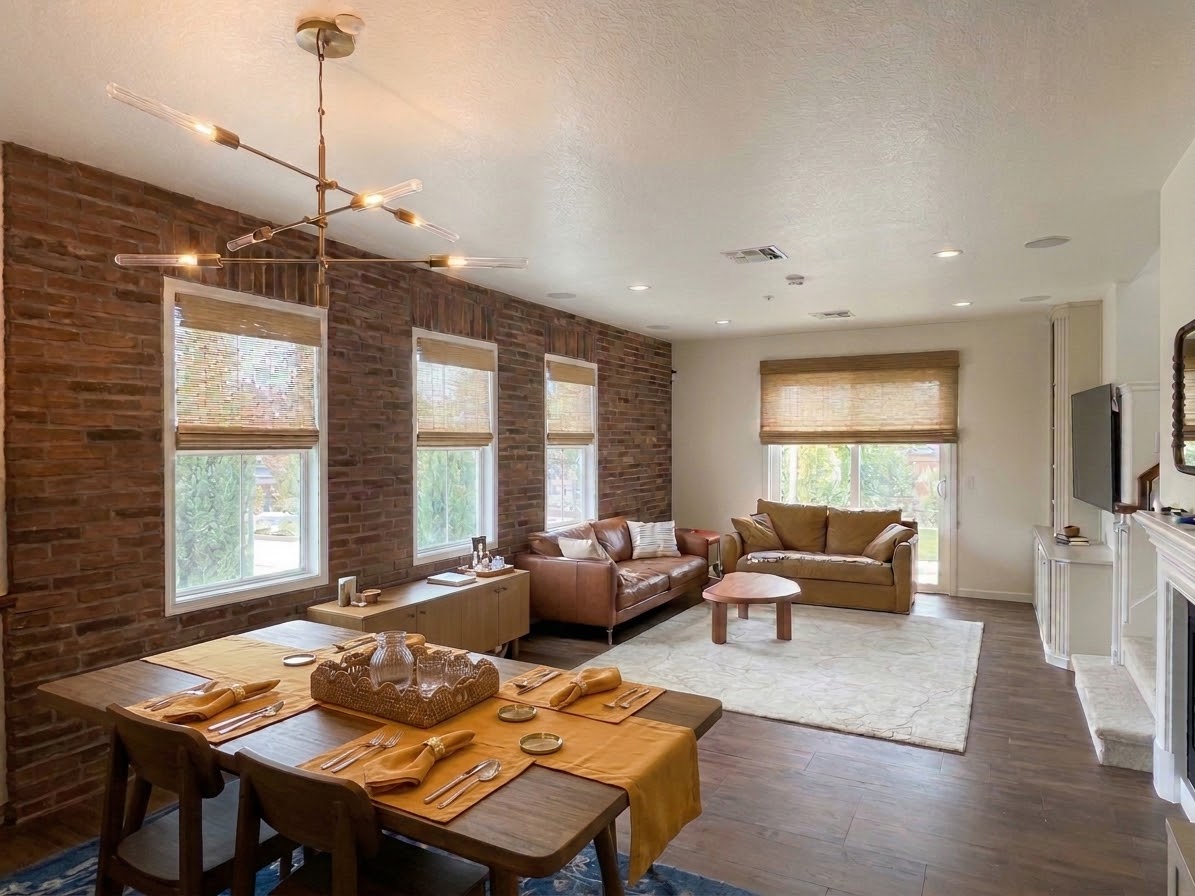
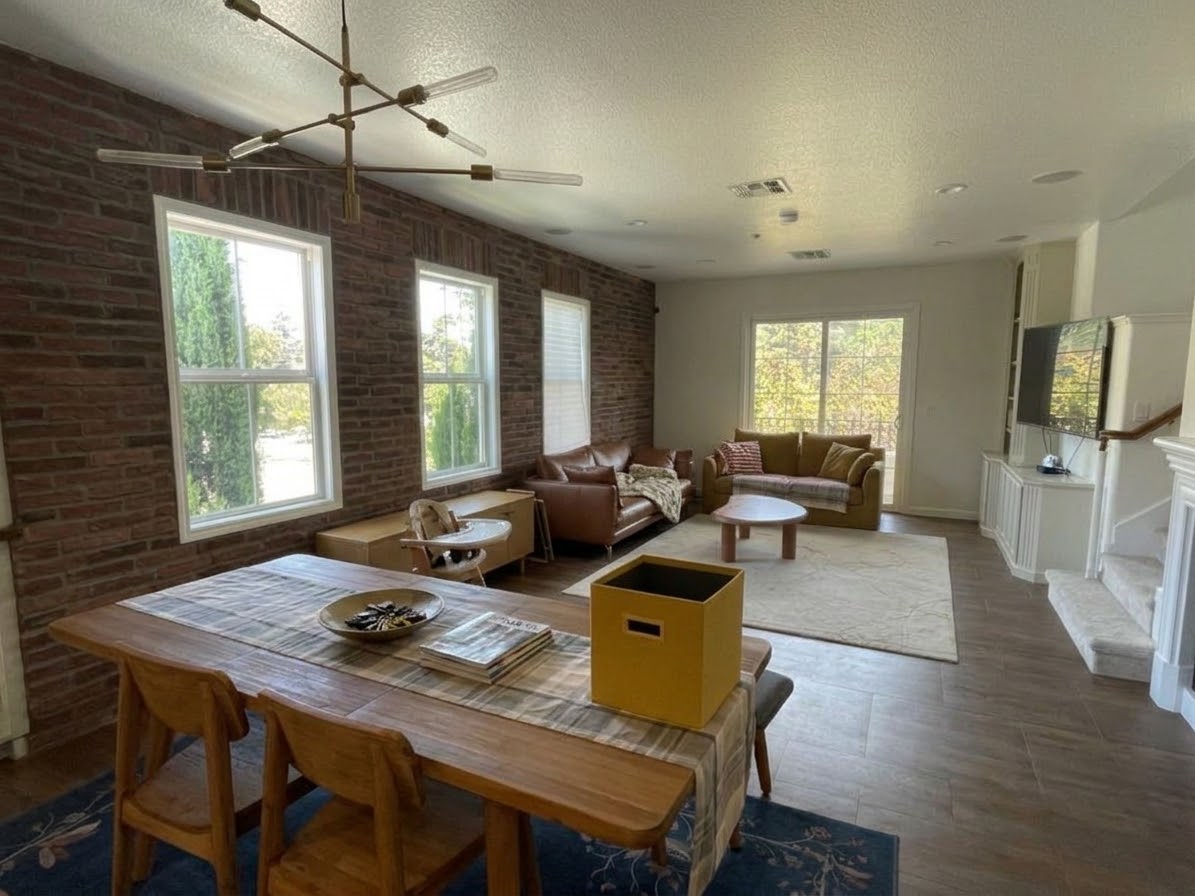
The living room had an architectural feature I particularly loved: beautiful exposed brick, with three large windows set alongside one another and an expansive patio door at the far end of the space.
The Design Challenge: Texture Against Texture
The brick brought depth, warmth, and raw character to the room. Its strong visual presence called for a thoughtful choice of materials—something that would complement its texture without competing with it.
As we explored different materials and finishes, I introduced natural woven shades from the Provenance collection.
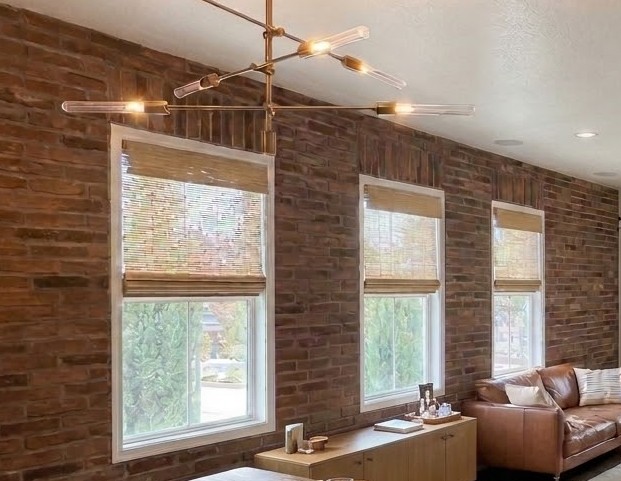
The natural weave offered an opportunity to create a dialogue between two organic surfaces: the irregular texture of the brick and the layered character of the woven material. It would also soften the incoming daylight while adding another dimension of texture to the room.
For me, the right choice is always one that responds to the architecture, materials, proportions, and overall character of the home.
One Room, Two Fabrics, One Composition
Rather than repeating the same material across every opening, I proposed a two-fabric approach that gives each area its own character while maintaining a cohesive overall composition.
For the three windows set against the exposed brick, we selected a lighter woven texture. It introduced warmth and dimension while maintaining a sense of visual lightness against the brick.
For the expansive patio door, positioned against a lighter wall at the far end of the room, we chose a deeper, denser brown weave. This gave that end of the space a stronger visual presence and helped ground the overall composition.
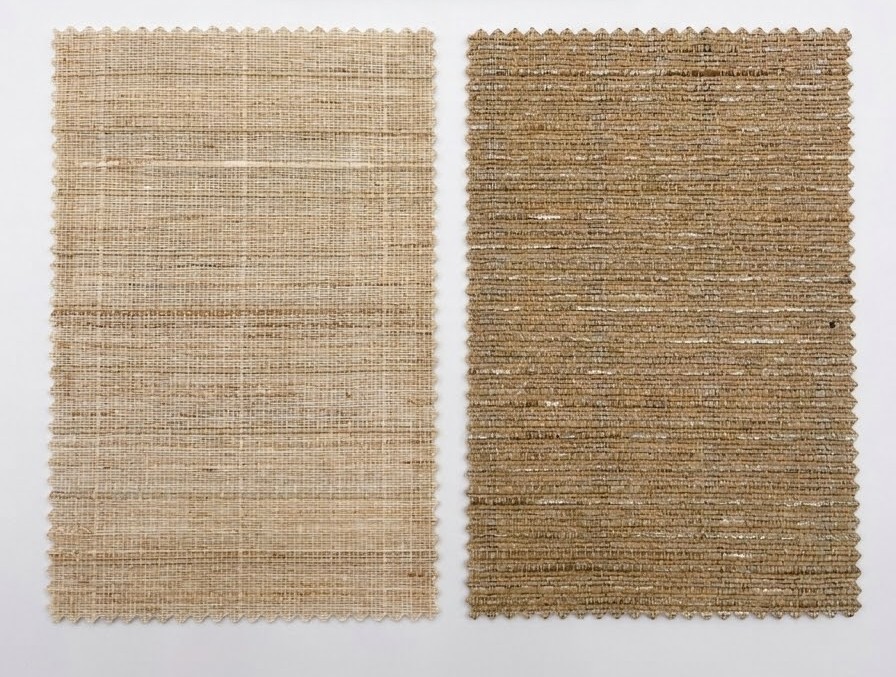
The two fabrics are related without being identical. Their tonal and textural relationship creates a subtle rhythm throughout the room, adding depth without sacrificing cohesion.
Cohesion doesn't require uniformity; it comes from knowing how different materials, textures, and tones can work together.
The Detail That Finishes It
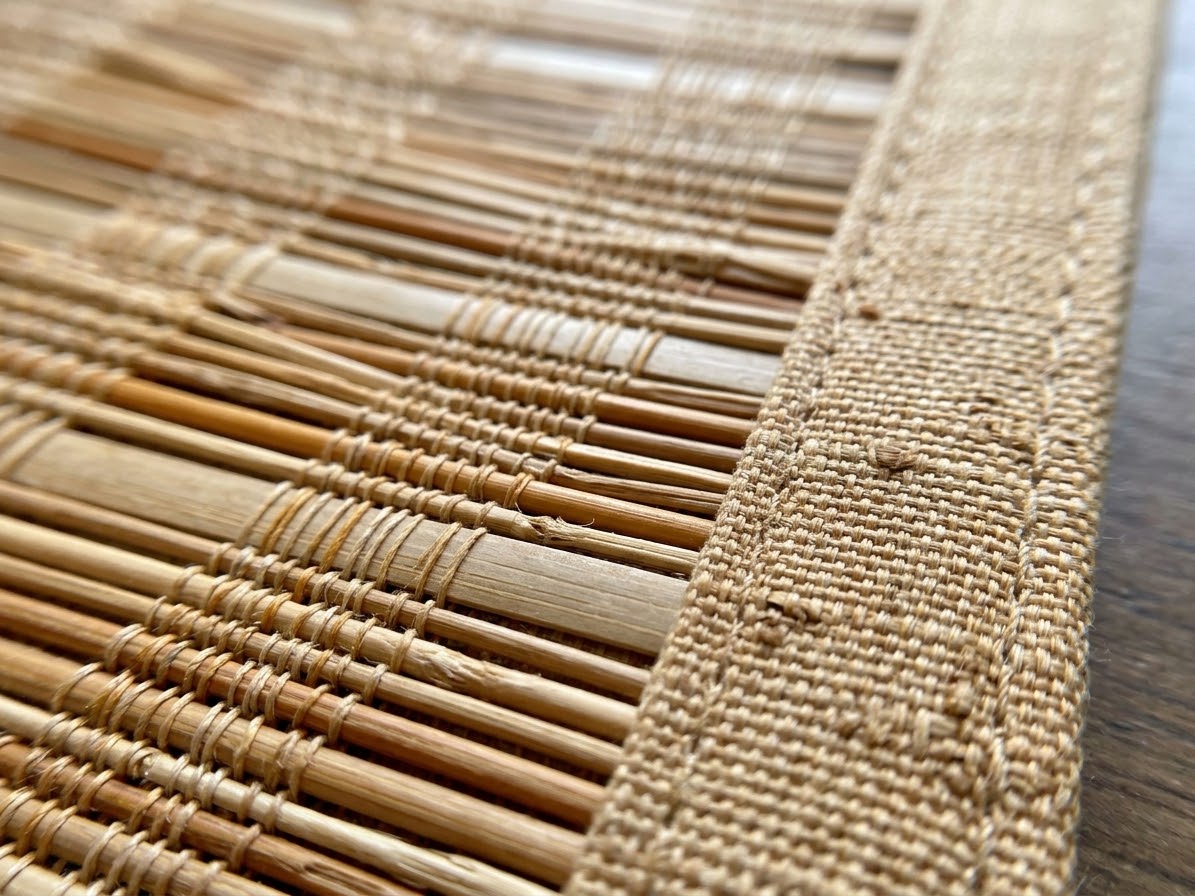
To complete both selections, I recommended decorative edge banding.
This additional detail gave the woven shades a more tailored appearance, defining their edges and creating a refined finish. The contrast between the natural weave and the decorative border brought another layer of definition to the treatments.
Designing Beyond the Living Room: Balancing the Entire Home
A whole-home project requires looking beyond individual windows and considering how the selections work together throughout the home.
The living room received a more substantial investment, with custom woven shades and decorative detailing that responded to its architectural features and visual prominence.
To maintain balance across the overall project, the remaining windows called for a more understated solution.
A cohesive design does not require the same level of investment or the same treatment in every room. It requires knowing where materials and details will have the greatest impact.
For the smaller windows, I recommended a simpler solution that complemented the overall palette while allowing the living room to remain the focal point.
In the entry hall and the nook at the bottom of the stairs, honeycomb shades in a coordinating neutral tone provided a clean, understated finish.
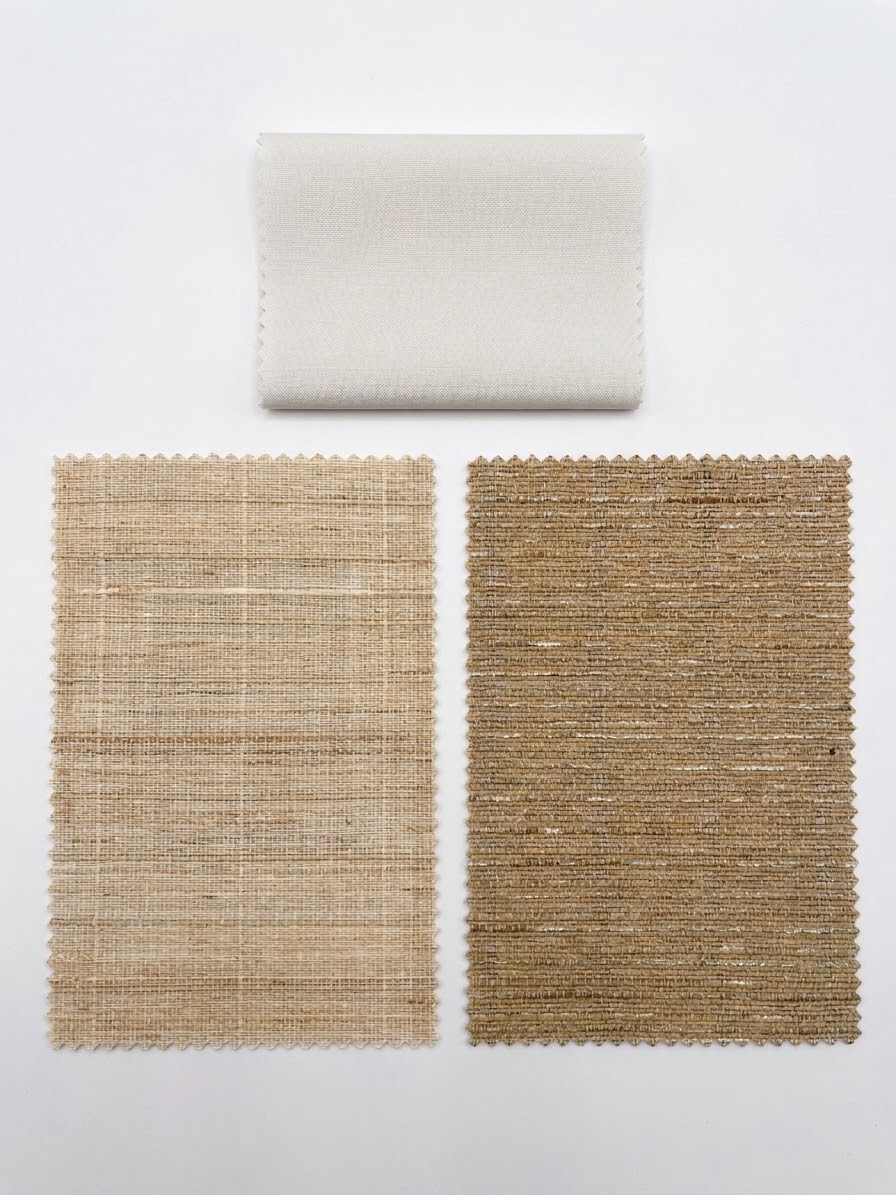
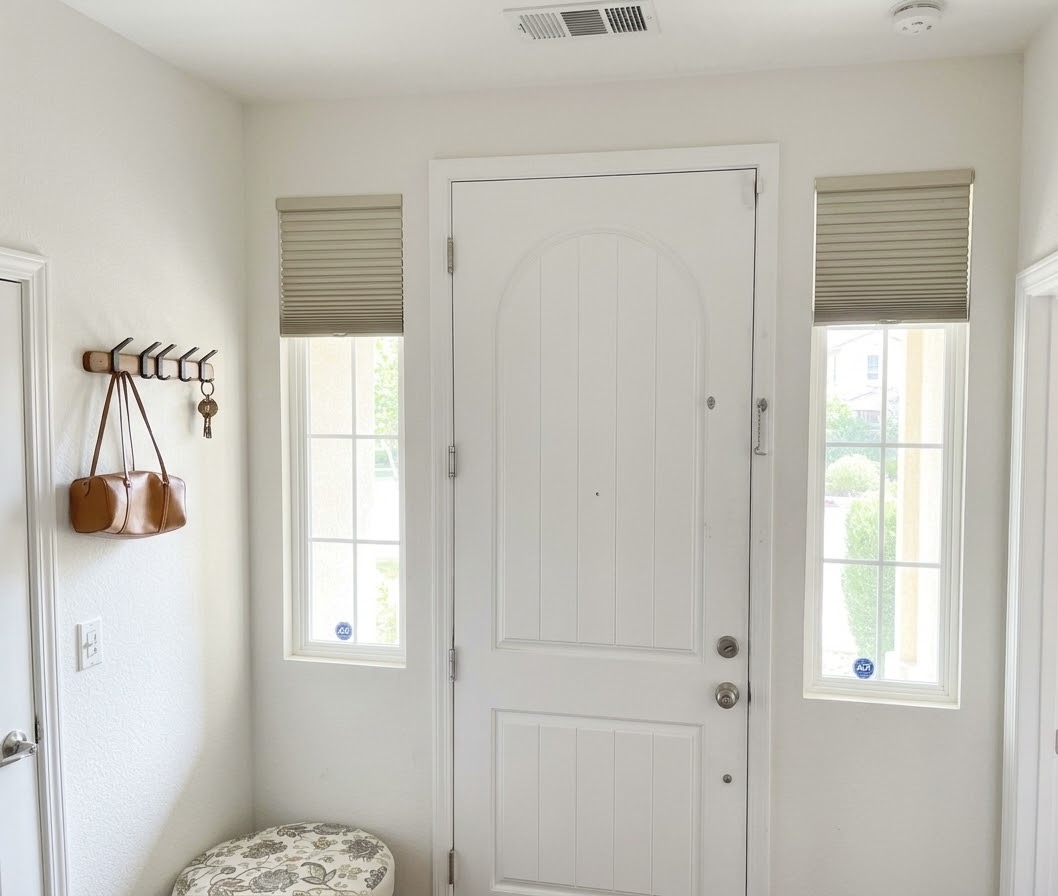
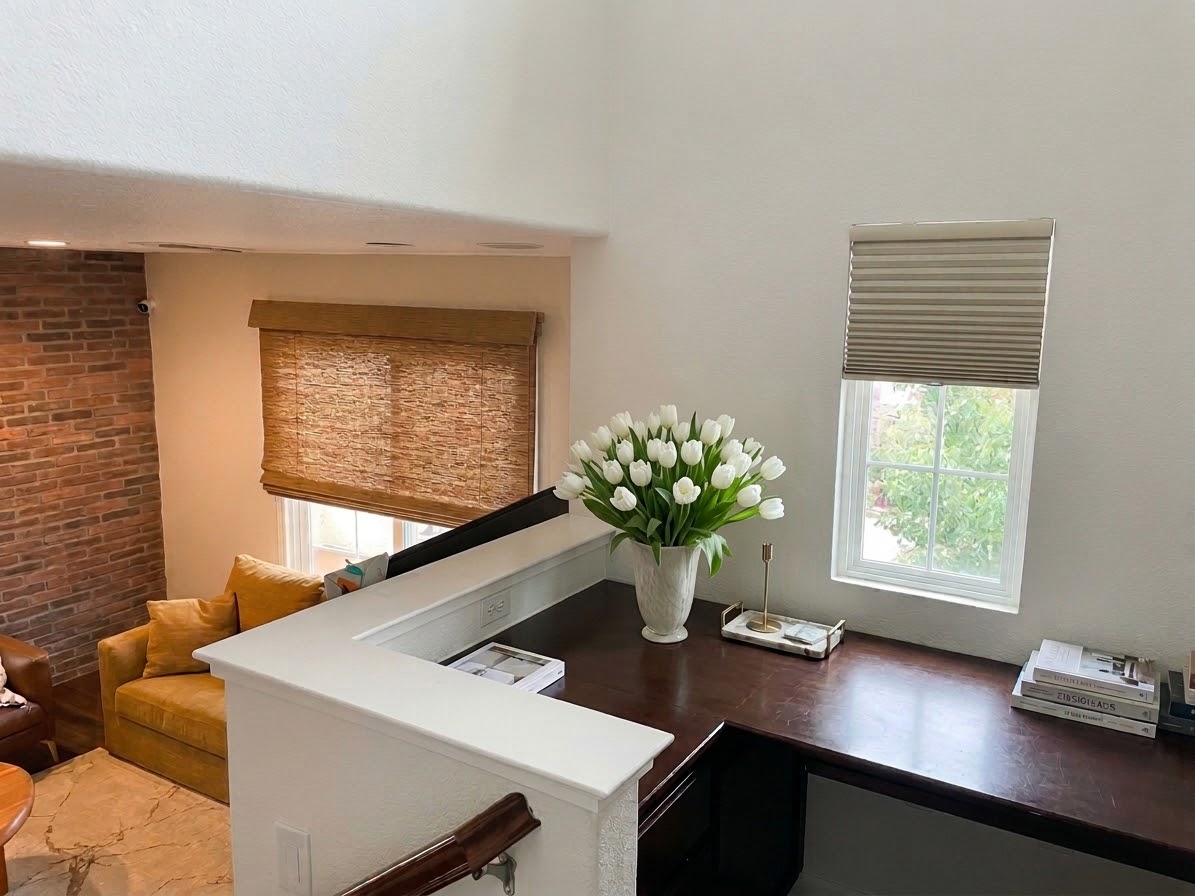
What made this part of the project particularly rewarding was the client's confidence in my recommendations. She entrusted me with selecting both the product and the color for these final windows, giving me complete creative freedom to bring the entire vision together.
The result was a considered approach to the whole home, with each treatment chosen according to its setting and role.
A Few Design Takeaways
Let Materials Speak to Architecture
Natural woven textures can introduce warmth and softness alongside architectural materials such as brick and stone, creating a more layered interior.
Create Cohesion Without Uniformity
Different windows within the same room do not necessarily need identical treatments. Thoughtful variations in texture and tone can create rhythm while maintaining a cohesive composition.
Balance Investment Across Spaces
Allocate more elaborate materials and detailing where they have the greatest visual impact, while choosing simpler solutions for secondary areas.
The Final Perspective
This project reflects how I approach window treatments: not as isolated finishing elements, but as an integral part of a room's architecture and overall design.
When the windows are considered from the beginning as part of the room, the result feels naturally resolved.
A well-designed window treatment does more than cover an opening. It completes a room.